
BPC-157 10mg Research Overview | Scientific Information UK
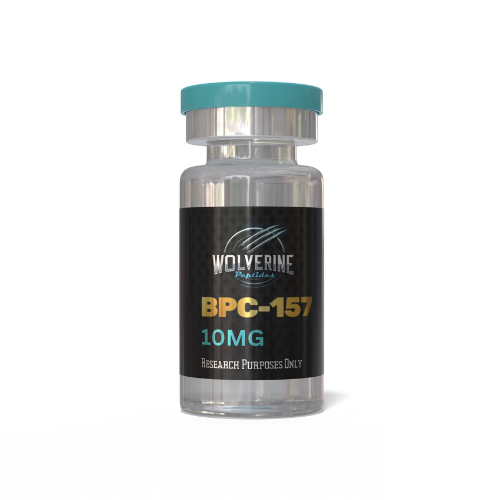
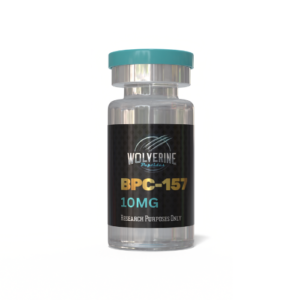
BPC-157 10mg: Research Overview, Laboratory Information & Current Scientific Evidence
BPC-157 is a synthetic peptide that has been investigated in preclinical laboratory research for its potential biological properties. It has attracted scientific interest due to studies exploring tissue repair, angiogenesis, gastrointestinal function, and other physiological mechanisms. Most of the available evidence comes from laboratory and animal studies, and there are currently no approved therapeutic uses for BPC-157 in the UK.
Researchers continue to study its molecular pathways, pharmacological characteristics, stability, and biological activity. While published studies have reported promising findings in experimental models, well-designed human clinical trials remain limited. Consequently, conclusions about its effectiveness or safety in people cannot currently be made.
Educational resources discussing BPC-157 should distinguish clearly between laboratory findings and established clinical evidence. Anyone reviewing research on this peptide should consider study quality, sample size, reproducibility, and regulatory guidance when interpreting published results.
Research Areas Being Investigated
- Tissue repair mechanisms in experimental models
- Angiogenesis and vascular biology
- Gastrointestinal research
- Cellular signalling pathways
- Tendon and ligament laboratory studies
- Inflammatory pathway research
- Experimental musculoskeletal models
These are areas of scientific investigation rather than established clinical benefits.
Purity
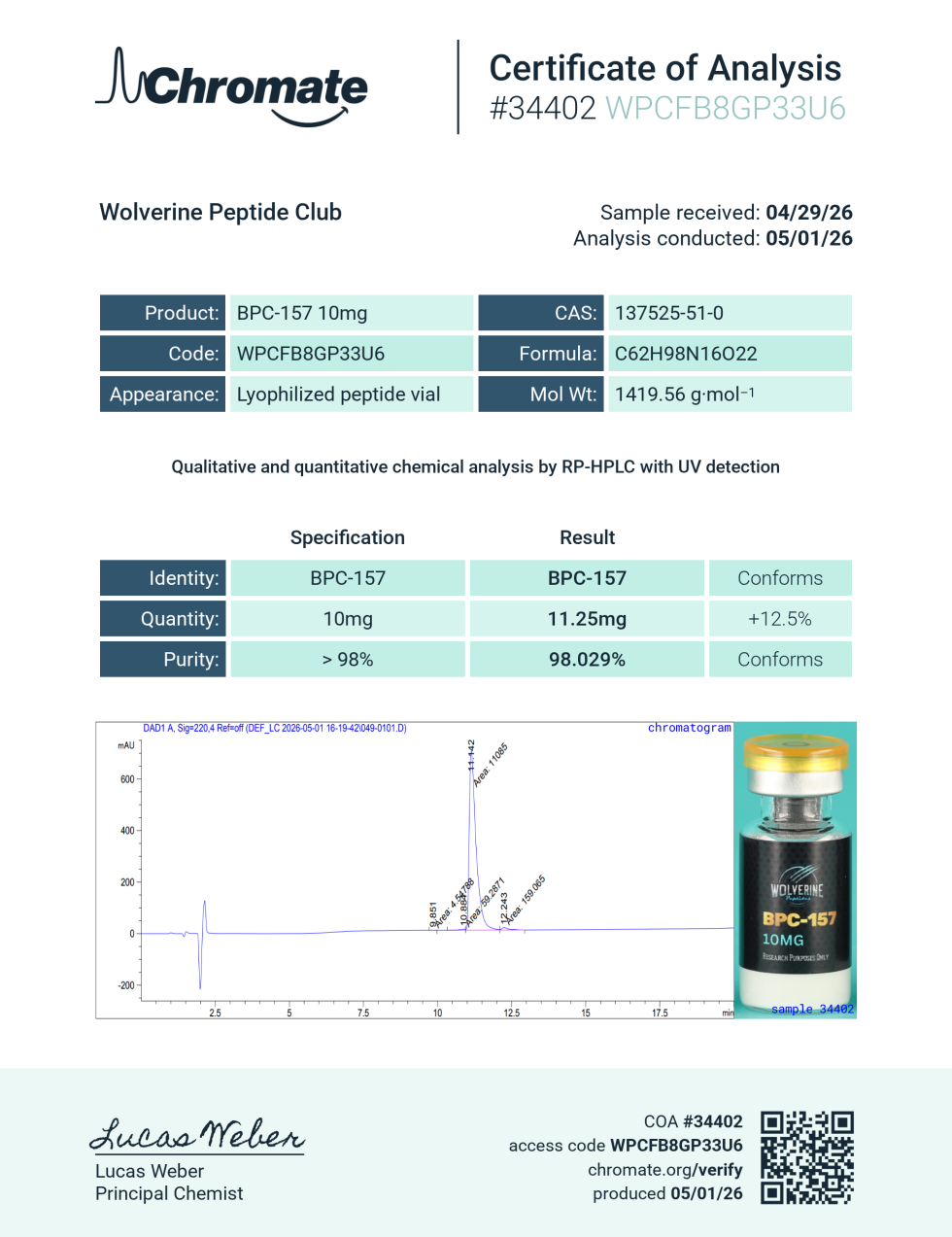
High-quality laboratory reference materials intended for research are commonly accompanied by:
- Certificate of Analysis (CoA)
- Batch identification
- Purity testing using validated analytical methods
- Manufacturing quality documentation where applicable
Usage Information
This information is provided solely for educational purposes.
BPC-157 is widely discussed in scientific literature as a research peptide. Researchers should consult published protocols, peer-reviewed literature, and institutional laboratory guidelines when designing experiments. It should not be presented as an approved treatment for any disease or medical condition.
Storage
Research materials are commonly stored according to manufacturer recommendations. Storage requirements vary depending on formulation and packaging. Always follow the documented storage guidance supplied with laboratory materials to help maintain sample integrity.
Laboratory Testing
Quality assessment of research peptides may include:
- High-Performance Liquid Chromatography (HPLC)
- Mass Spectrometry (MS)
- Identity verification
- Purity analysis
- Batch consistency testing
Frequently Asked Questions
What is BPC-157?
BPC-157 is a synthetic peptide that has been studied primarily in laboratory and animal research.
Is BPC-157 approved as a medicine in the UK?
It is not approved as a licensed medicine for routine clinical use in the UK.
What does current research investigate?
Current studies primarily investigate biological mechanisms, including tissue repair, angiogenesis, and gastrointestinal function in experimental settings.
Are there human clinical trials?
Human research remains limited, and additional high-quality clinical studies are needed to determine safety and efficacy.
Can laboratory findings be applied directly to people?
No. Results observed in laboratory or animal studies do not necessarily predict outcomes in humans.
Why is quality testing important?
Analytical testing helps researchers verify the identity, purity, and consistency of laboratory materials.
Reviews
There are no reviews yet.